


Page 266 - The Guide To Sarawak
P. 266
 264 AGRICULTURE
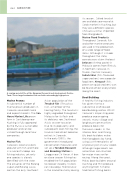
    A rearing pond at the at the Empurau Research and development Centre, Tarat. These large freshwater fish can fetch astoundingly high prices.
its season. Salted terubok are available year-round at Satok market in Kuching, but they are a different species (Tenualosa ilisha) imported from Bangladesh.
Marine Food Products
Throughout Sarawak, fish and other marine creatures are used in the production
of a wide range of food items. Although it is made throughout the state, connoisseurs claim the best belacan (shrimp paste) in Malaysia comes from Bintulu in Northern Sarawak. In Mukah (Central Sarawak), tebaloi ikan (fish-flavoured sago crackers) are a popular food item. Keropok (fish, prawn or squid crackers) can be found almost everywhere along the coast.
Boat Building
A healthy fishing industry has given rise to a substantial craft-based boatbuilding sector. Whilst Sarawak’s major shipyards produce ocean-going vessels, many village and longhouse communities produce boats for
their own needs. In the interior, Iban and Orang
Ulu boat-builders make their longboats by hand, using just three planks of engkebang or ensurai wood, although larger boats are sometimes constructed
for major rivers or for racing. Along the coast, Malay boat-builders around Kuching and Miri produce anything from 5-metre traditional fishing boats
Marine Prawns
A substantial number of marine prawn producers in Sarawak serve both local and export markets. The Sea Horse Marine Life prawn farm in Santubong near Kuching is fully approved
by the EU as a sustainable producer and can be visited through local tour companies.
Marine Fish
Sarawak’s coastal waters abound with fish and there is a successful deep sea fishing industry, yet only one species is closely identified with the state. The estuaries of the Batang Lupar and Batang Lassa contain the only Southeast
Asian population of the Terubok fish (Tenualosa
toli), a member of the herring family. The terubok is highly regarded throughout Malaysia for its flesh and
its delicious roe, Southeast Asia’s answer to caviar.
Due to its popularity and subsequent over-fishing, the terubok had almost become extinct in Sarawak.
In the early 1990’s, the government introduced conservation measures and set up a Terubok Research and Breeding Station in Lingga near Sri Aman. A ban on close season fishing has enabled the fish population to recover steadily. Visitors can nowadays find terubok in the market but only during


