


Page 42 - The Guide To Sarawak
P. 42
 40
INTRODUCTION TO THE STATE OF SARAWAK
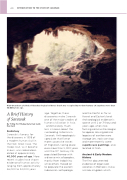
  Niah Great Cave yielded solid archaeological evidence that it was occupied by modern humans (H. Sapiens) more than 40,000 years ago.
A Brief History of Sarawak
By Y Bhg Prof Madya Datu Haji Sanib Haji Said
Prehistory
Sarawak is famous for
the discovery in 1958 of
a modern human skull in the Niah Great Cave. The ‘Deep Skull,’ as it became known, was radiocarbon dated at approximately 40,000 years of age. More recent studies have shown evidence of human activity ranging from approximately 46,000 to 34,000 years
ago. Together, these discoveries make Sarawak one of the major cradles of human civilisation in Asia.
Unfortunately, much
less is known about the succeeding millennia in Sarawak. Anthropologists speculate that five or
more successive waves
of migration, taking place over more than 5,000 years until the 13th Century CE, populated Borneo with
a diverse mix of peoples, mostly from Indochina, while others moved on
to populate the eastern Indonesian archipelago
and the Pacific as far as Hawaii and Easter Island. Archaeological evidence is sparse until 2 or 3 thousand years ago, when rice- farming communities began to appear, leaving behind legacies of earthenware storage jars, rock carvings and more recently some superb cave paintings, also located at Niah.
Ancient & Early Modern History
The first documented evidence of organised societies in Borneo is Kutai, a Hindu kingdom which


