


Page 45 - The Guide To Sarawak
P. 45
THE GUIDE TO SARAWAK
43
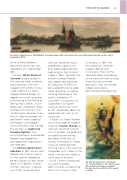
    An artist’s impression of The Royalist, a heavily-armed 142-ton topsail schooner that James Brooke used to sail to Sarawak in 1839.
of naval force before a document of cession was signed on 24th September 1841.
The new White Rajah of Sarawak sought to pacify the warring tribes and end coastal piracy, with the support of the British Navy under Admiral Sir Henry Keppel. Brooke fought an aggressive naval campaign culminating in the Battle of Beting Maru (1849), which effectively wiped out Malay and Iban resistance in the Saribas area. However, many British Liberal members of parliament were sceptical
of Brooke’s and Keppel’s claims of piracy and viewed the ‘pirates’ as legitimate freedom fighters. The resulting enquiry exonerated Brooke and Keppel but damaged their reputations considerably.
The Chinese gold miners’ rebellion of 1857 almost cost Brooke the state as well as his life, and he needed to
be rescued by an Iban force led by his nephew, Charles Anthoni Johnson. Sarawak was finally at peace after
Johnson led three major expeditions against the Iban rebel leader Rentap, capturing his fort at Bukit Sadok in 1861. Towards the end of his reign Brooke, now appointed Governor of Labuan by the British, persuaded Brunei to cede more territories including Tanjong Kidurong to the north. He died on 11th
June 1867 in England, still a bachelor, having left Sarawak for the last time on 18th September 1863. He appointed Johnson as his successor.
If Rajah Sir James Brooke was the founder of modern Sarawak, Charles Brooke, as Johnson renamed himself, was its builder. He gradually annexed the remaining territories of Brunei, so
that by the end of his reign Sarawak stretched from Tanjung Datu in the south to the border with Sabah in the north, with Brunei merely a small coastal enclave.
Rajah Charles introduced a system of public administration, establishing the Council Negri (State
Assembly) in 1867, the foundation of Sarawak’s modern democratic institutions. Many of the splendid colonial buildings at the heart of Old Kuching were also constructed during his rule. He started rubber plantations, permitted oil prospecting,
     An artist’s impression of Rentap
(or “world-shaker”), the rebel leader who led Iban resistance against
the Brookes from 1843 to his death in 1870.


