


Page 99 - The Guide To Sarawak
P. 99
THE GUIDE TO SARAWAK
97
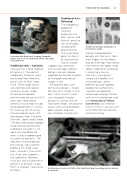
      A modern kiln-fired vase, showing Sarawak’s unique fusion of Teochew-style forms and indig- enous patterns.
Traditional Arts - Tattooing
The indigenous people of Sarawak, especially the Iban, Kayan, and Kenyah, practise the art of body tattooing for beautification. The styles bear great similarity to those of the Pacific islands,
Traditional designs displayed in a local tattoo studio.
women had elaborate designs on their arms from their fingers to the elbow and on their legs from below the knee to the upper thigh. Today, traditional tattooing is enjoying a revival,
and many youngsters
tattoo their bodies with native designs, often preferring hand-tapped needles for authenticity. Sarawak has become renowned amongst tattoo enthusiasts worldwide, and the International Tattoo Convention was held for
the first time in January 2011 at the Borneo Convention Centre Kuching.
Traditional Arts – Ceramics
Sarawak has a long tradition of ceramics. The earliest indigenous ceramics were excavated from Neolithic burial sites at Niah Great Cave. These large jars or urns, bottles and special funerary vessels made
of coarse-tempered earthenware are up to 4,000 years old. More recent ceramics excavated include some dated from 11th to the 13th Century CE, of mainly Chinese provenance, with later pieces from Thailand, Vietnam, Japan and Europe. The Iban and Kelabit people hand-mould and fire their traditional clay pots in an open fire and decorate
them using a wooden pad incised with patterns. The Teochew Chinese potters
of Kuching, Sibu and Miri produce kiln-fired vases from Sarawak’s fine white clay. They are shaped in
the traditional Teochew style, but the incised ethnic patterns and motifs make them a uniquely Sarawakian art form.
suggesting a common artistic heritage. Specific designs are considered appropriate for certain parts of the body and certain stages in life.
Among the Iban, one distinctive design is meant for the man’s throat. In the past when a man’s hand
was tattooed it meant bravery in war or that he had taken heads. Among the Kayan, Kenyah and Kelabit, both women and men
are tattooed. Aristocratic
    An Iban man receives his tattoo the traditional way, hand-tapped by a master body artist.


