


Page 113 - Westport Guide To Malaysia
P. 113
THE GUIDE TO MALAYSIA 105
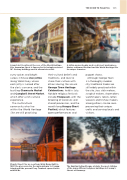
    A must-visit location at the core of the World Heritage Site. Armenian Street is famous for its lovingly-restored 19th Century buildings and its vibrant street art.
A rattan weaver begins work on his next masterpiece. Master craftsmen like him lend the World Heritage Site its unique character.
curry spices and bright sarees; Chinese clan jetties along Weld Quay, where each jetty is named after
the clan’s surname; and the bustling Chowrasta Market and Campbell Street Market, which offer a rich cultural experience.
The multicultural community who live within the World Heritage Site are still practising
their cultural beliefs and traditions, and love to share their culture with others during the annual George Town Heritage Celebrations, held in July. Notable religious festivals include Thaipusam, with the breaking of coconuts and chariot procession, and the month-long Hungry Ghost Festival, which features opera performances and
puppet shows. Although George Town
is a thoroughly modern
city, traditional trades are
still widely practised within the site. Joss stick makers, songkok makers, shoemakers, watchmakers, tailors, rattan weavers and trishaw makers, among others, can be seen preserving their unique
crafts and serving locals and visitors.
        Church Street Pier as seen from Weld Quay. Built in 1897, the pier served as the main gateway to Penang Island until the present Ferry Terminal opened in the mid-1960s.
The Kapitan Keling Mosque at dusk, the most striking of the many different religious buildings in Penang’s Streets of Harmony.


