


Page 15 - The Guide To Sarawak
P. 15
THE GUIDE TO SARAWAK
13
   Malaysia with extensive tropical rainforests and over 50% of the country remains under forest cover. Malaysia is home to roughly 20% of the world’s species of fauna and flora, a large proportion of which are not found elsewhere on the planet. Conservation International rates Malaysia as one of
the 17 most biodiverse countries in the world.
Historical Background
Malaysia’s history has been shaped by its location on the principal trade routes between East and West Asia, with archaeological evidence of trade between China and the Malay Peninsula from the 1st Century CE.
Modern Malaysian history began with the founding of Melaka by Parameswara at the beginning of the
15th Century. Over a few decades Melaka grew in importance economically to become the capital of the Melaka Sultanate. As a major maritime hub, Melaka attracted Muslim traders from various part of the world and became a center of Islam in the region.
Following a period of Portuguese and Dutch control, British colonisation began in the 18th Century, with the lease of Prince
of Wales Island (Pulau Pinang) and Province Wellesley (Seberang Perai) by the British East India Company, along with the founding of Singapore by
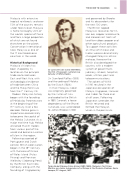
Sir James Brooke (ruled 1841-1868), the first of Sarawak’s century-long dynasty of White Rajahs.
Sir Stamford Raffles (1819) and the ceding of Melaka by the Dutch (1824).
In East Malaysia, Sabah was originally governed
by the Sultan of Sulu
and ceded to the British
in 1881. Sarawak, a loose dependency of the Brunei Sultanate, was surrendered to James Brooke in 1841
and governed by Brooke and his descendants for the next 100 years.
The British tapped Malaysia’s resources for tin, iron ore, copper and bauxite, and cleared vast tracts of land for rubber, pepper and other agricultural products. To support these activities an influx of Chinese and Indian workers dramatically changed Malaysia’s ethnic makeup. However the
British also developed the country, with a modern system of government, judiciary, schools, hospitals, roads, utilities, post and telecommunications.
The advent of WWII
in 1941 resulted in the Japanese occupation of Malaya, Singapore, Sarawak and Sabah for three and
a half years. Following Japanese surrender, the British returned and formed the Malayan
Union in the peninsula,
       Tunku Abdul Rahman Putra Al-Haj (1903-1990), Malaysia’s first Prime Minister, proclaims independence for Malaya at the Merdeka Stadium, Kuala Lumpur, 31st August, 1957.


