


Page 260 - The Guide To Sarawak
P. 260
 258 AGRICULTURE
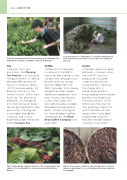
   Tourists learning all about tea growing at the Mayang Tea Plantation in Serian, Sarawak’s only tea plantation.
Leaf maceration or “disruption”. A worker deliberately tears harvested tea leaves to accelerate the oxidation process.
Cocoa
Although cocoa has been planted in Sarawak since the mid-19th Century, production has been
in decline due to low market prices. However, the strong rally in
world cocoa prices is encouraging former cocoa planters to rehabilitate their plantations, while others are moving into new planting. More than 6,400 hectares of new cocoa farms have been established and 600 hectares rehabilitated in Sarawak since 2006.
Tea
Sarawak’s only tea plantation, the Mayang Tea Project, was set up by the government in 1982 to develop 188 hectares of Native Customary Rights (NCR) land owned by 174 Bidayuh families in the Serian District, 90km from Kuching. The plantation produces an average of 250-300 tonnes of black tea (English breakfast tea) per annum. Mayang tea
is available throughout Sarawak, and is also exported under the brand name Sarawak Tea.
Coffee
    Coffee was first planted
in Sarawak in the 1890’s, mostly by Iban families in the Saribas area, although much of their land was turned
over to rubber from the 1920’s onwards. With strong competition from nearby world class producers Java and Sumatra, the industry
is very small scale, with
few highland areas suitable for producing high quality beans. Visitors wishing to
try Sarawak-grown coffee should contact the Black Bean Coffee Company (see page 269).
    This locally-grown organic robusta coffee is planted in the shade of coconut palms to ensure an unusually delicate flavour.
Dried cocoa beans ready for processing. Due to its low labour requirement, cocoa is making a strong comeback in Sarawak.


