


Page 364 - The Guide To Sarawak
P. 364
 362 USEFUL INFORMATION
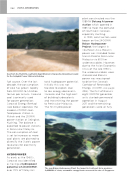
    Coal from the Merit-Pila coalfield in Kapit Division is transported downriver, bound for the Sejingkat Power Station in Kuching.
plant constructed was the 108MW Batang Ai power station which opened in 1985 to meet the demand of Southwest Sarawak, especially Kuching.
In 1995, construction work began on the 2400MW Bakun Hydropower Project, the largest in Southeast Asia. Bakun’s power was intended to be transmitted to Peninsular Malaysia via 650 km undersea cables. However, due to the Asian Economic Crisis of the late 1990’s,
the undersea cables were shelved and Bakun’s power was reassigned
to drive the Sarawak Corridor of Renewable Energy (SCORE, see page 338). The first of Bakun’s eight 300MW generator units started commercial operation in August
2011 and the remaining generators were all fully
fuel source. Over the last decade, the consumption of coal has grown rapidly from 300,000 to 1.4 million tonnes per annum. Sarawak coal is primarily used
for power generation; Sarawak Energy Berhad (see below) operates the modern 270MW coal-
fired power station in Mukah and the 210MW power station at Sejingkat, Kuching. The balance is exported to power stations in Peninsular Malaysia.
The consumption of coal is set to increase as more coal plants are planned to diversify the State’s power resources for electricity generation.
HYDROPOWER
As early as the 1960’s, Sarawak was identified as having a hydropower potential of 20,000MW, over 70% of Malaysia’s
total hydropower potential. Initially this was not feasible to exploit, due
to low energy demand in Sarawak and the high cost of building hydro plants and transmitting the power to Peninsular Malaysia.
The first hydro power
    The new Bakun Hydropower Plant, the largest in Southeast Asia, produces 2,400MW of clean, renewable energy from a reservoir the size of Singapore.


