


Page 386 - The Guide To Sarawak
P. 386
 384 USEFUL INFORMATION
 Protecting The Environment
Sarawak is well-endowed with natural resources and is very rich in biodiversity. Therefore, top priority is given to their protection and conservation. The State Government is
very committed towards achieving sustainable development.
Legislators have been aware of the importance
of Sarawak’s natural environment since the colonial era. After the Rio Summit in 1992, existing legislation was reviewed and strengthened to incorporate protection
of environmental quality and pave the way for
the establishment of
the Natural Resources
and Environment Board (NREB) in 1994. The NREB is responsible for ensuring that development activities are implemented in a coordinated and integrated
manner, and that utilization of natural resources
will not degrade the environment. The NREB is also entrusted to formulate or develop policies,
laws and guidelines to protect and manage
the environment, and to enforce existing legislation to achieve sustainable development.
The Federal Department of Environment (DOE) is responsible for monitoring environmental quality related to industrial development, regulating and managing disposal
of scheduled and toxic wastes, and enforcing
the requirements of the Environmental Quality Act 1974. Other environmental legislation is regulated and enforced by a variety of statutory bodies and agencies.
Environmental Protection & Development
It is mandatory for
all major prescribed
developments to conduct an Environmental
Impact Assessment
(EIA) and submit the report for approval by
the NREB and the DOE before commencement
of activities. EIAs are mandatory for agriculture, logging, property, any activities affecting water courses and supplies, fisheries and aquaculture, quarrying and mining, and any other activities which may adversely affect the quality of environment or natural resources. These prescribed activities are regulated and controlled through the EIA process, including post-EIA monitoring, auditing
and reporting to ensure compliance with statutory requirements.
Pollution Control
Pollution control strategies focus on efficient utilisation of resources, proper waste disposal and minimisation of risk; and
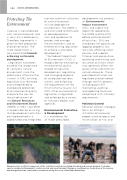
        Mangroves are a critical component of the coastal ecosystem, providing breeding and nursery grounds for marine species and protecting against coastal erosion and even tsunamis. Mangrove seedlings are shown here in the nursery and being planted by conservation volunteers along the coast of the Bako-Buntal Bay.


