


Page 395 - The Guide To Sarawak
P. 395
THE GUIDE TO SARAWAK 393
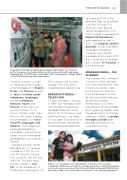
     Sarawak Tourism Minister Datuk Amar Abang Johari (right) accompanied
by The Star group chief editor Datuk Seri Wong Chun Wai (left) and group managing director/CEO Datin Linda Ngiam after launching the Sarawak edition of the Star Media Group’s 988 radio station.
to Sarawak. RTM is the principal free-to-air player with the TV1 and TV2 channels, with private sector broadcasters TV3, NTV7 and 8TV also present. Digital HD broadcasts
are expected to start in 2015. The national satellite provider, Astro, also offers coverage throughout Sarawak with literally hundreds of channels. RTM plans to launch a Sarawak- only station, TV Sarawak, in the near future.
EMERGING MEDIA – THE INTERNET
The Internet only arrived in Sarawak in 1994, yet both the State Government and the private sector – led
by the tourism industry - have embraced it as one
of their principal mediums of communication. Penetration is still only around 30% of households, but is growing rapidly, and the government is making strenuous efforts to bridge the digital divide and provide connectivity to rural communities.
national stations, as well
as three local FM stations, which broadcast in English, Malay and Chinese as well as Iban and other major indigenous languages including Melanau, Bidayuh, Kayan and Kenyah. There are also district stations in Sri Aman, Sarikei, Kapit, Sibu, Bintulu, Miri and Limbang which broadcast in local minority languages and dialects. The indigenous language broadcasts
have been, and continue
to be, crucial in bringing development to Sarawak’s interior.
National private sector broadcasters in Sarawak include Hitz FM, My FM, Lite FM, Era FM, XFresh FM, Sinar FM, Hot FM and IKIM FM. The only local private station is Cats
FM, which broadcasts in Malay, Iban and English. All
RTM and private stations (except IKIM FM) offer targeted local advertising.
BROADCAST MEDIA – TELEVISION
TV only arrived in Sarawak in 1980, but nowadays even the remotest longhouses are bedecked with small forests of TV antennas and satellite dishes. Like radio, TV has been instrumental in disseminating information and bringing development
    E-Bario is a remarkably successful initiative to put the remote Kelabit community of Bario in touch with the outside world via the Internet. Originally conceived as a research project by Universiti Malaysia Sarawak (UNIMAS) and launched in 1999, it is now run almost entirely by local community members.


