


Page 59 - The Guide To Sarawak
P. 59
THE GUIDE TO SARAWAK
57
   tuak to visitors. If the guest cannot take the drink he can respectfully decline the offer by touching the glass.
The best-known traditional art of the Iban is the weaving of exquisite pua kumbu textiles by the womenfolk. Cotton dyed with natural dyes is woven into intricate scarves
and blankets using the single-ikat technique on
a backstrap loom, with some pieces taking many months or even years to complete. These works of art are woven entirely from the imagination, without using patterns, and the best of them are very rare and precious, and are kept as family heirlooms and sought after by prominent collectors. In the past,
Iban women were able to achieve the equivalent of warrior rank by weaving a particularly fine piece. Such ladies can be identified by the ziz-zag tattoo on their wrist.
THE IBAN TODAY
With the expansion of population and government enforced regulation on the felling of virgin forest, the Iban practice of shifting cultivation has stopped. They are now cultivating rubber and pepper and
are involved in planting oil palm. Many have moved into business, including
the construction industry, plantations and trading.
Two aspects of traditional Iban culture may have
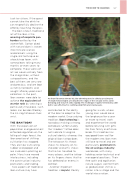
An Iban fisherman throws his jala (throwing net) in a likely spot. Dozens
of small metal weights are attached to edges of the circular net to aid in throwing and ensure it sinks rapidly. The technique requires tremendous skill but is very effective for catching small fish and crustaceans.
   contributed to the ability
of the Iban to adapt to the modern world. Once a dying tradition, Iban tattooing is nowadays making a strong comeback. Unfortunately the “modern” tattoo does not indicate its original cultural identity whereas the original Iban tattoo does. The tattoo on his throat shows his bravery, on his shoulder and arms shows that he has travelled to many places, and the tattoo on his fingers shows that he has defeated an enemy in combat.
Another important tradition is bejalai, literally
going for a walk, where young men would leave
the longhouse for a year
or more to travel, work
and experience the world before retuning with gifts for their family and future bride. This tradition has equipped them well for
the modern era; Iban men still love to travel and are particularly prominent in the oil and gas industry worldwide, with many holding senior technical and managerial positions. Their free spirit and egalitarian nature augurs well for them as globalisation shrinks a nation into a village and the world into a nation.


