


Page 74 - The Guide To Sarawak
P. 74
 72
THE PEOPLE
 required a plentiful supply of fresh clean water. The economy of the coastal villages revolved around fishing, or fishing-related activities such as boat building. Individual villages were also reliant on trade as a resource, both with other villages and with outsiders beyond the region.
In the past, the Melanau practised secondary burial and were known for the use of tall burial poles (jerunei or kelidieng) as tombs
for the rich and powerful
to indicate status. These poles could be either carved or plain and were erected on the riverbank alongside the longhouse. Before their conversion to Islam and Christianity, the Melanau also held elaborate curing rituals conducted
by a shaman, using carved effigies (dakan or blum) made of sago pith.
Like most other groups in Sarawak, the Melanau
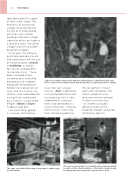
Sago is the staple starch in the Melanau diet and also a significant cash crop. Here a team of men strip the bark and fronds from a sago palm prior to felling.
   have their own unique festival – Kaul. Traditionally a ritual of propitiation and thanksgiving, Kaul is now celebrated as a secular event and promoted as a tourist attraction. Melanau communities, stretching from the Rejang delta to
Brunei, gather in Mukah each April to display their talents, products and resources and to take part in communal activities
- an impressive public demonstration of the ongoing strength and pride of Melanau identity.
      The sago wood powder is continually rinsed and pounded The sago log is then filed using a long rasp to obtain sago to wash out the starch, which is collected in a long trough
wood powder. for drying and processing into sago pearls or flour.


