


Page 86 - The Guide To Sarawak
P. 86
 84
OTHER COMMUNITIES
    The Indians
By Kapitan Lucy Lingam & Mr. R Anthony
ORIGIN AND HISTORY
The origin of the Indians
in Sarawak can be traced back to the Brooke era. A few South Indian Muslim families were involved in
the spice and textile trades in Kuching by the mid-19th Century, and Rajah Sir James Brooke began recruiting small numbers of Sikhs for the police force at the same time (see page 86). The largest single influx, however, was in 1887, when Rajah Sir Charles Brooke recruited
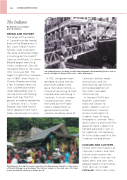
a few hundred Indians to start a coffee plantation (later replaced by tea) in the mountains of Matang, near Kuching. The first groups arrived on board the SS Vorwats and SS Vyner Brooke, and were mostly Tamil speakers from Tamil Nadu, Kerala and Sri Lanka.
An undated photo showing South Indian migrants disembarking from a ship to work on Rajah Sir Charles Brooke’s coffee plantation.
In 1912, the government decided to close the tea plantation project and gave the Indian families a choice of returning to their homeland or remaining in Sarawak. A small number stayed and most were recruited by the Public Works Department as general construction workers, building some of
Sarawak’s earliest roads and railways and this contributing significantly to the development of the state’s transport infrastructure.
In the post WWII era, teachers came from
India and Ceylon to
teach subjects such as mathematics, science, history and English to students from all races throughout Sarawak. Many locals claim to owe their firm grasp of these subjects to notable educators such as Mr Sebastian, Mr Abraham, Mr & Mrs Babu and Mr & Mrs Clarence, among others.
CULTURE AND CUSTOMS
Hindus form the majority of Sarawak’s Indians and their culture and customs are highly visible in the way the ladies dress and how they prepare food in their homes. Their festivals include Puthandu (Tamil New Year),
    Worshippers throng the newly-renovated Sri Mariamman Temple on the slopes of Mount Matang, near Kuching. This historic temple is the only one of its type in the world built entirely of belian wood.


