


Page 372 - Westport Guide To Malaysia
P. 372
 364 MALAYSIA MEANS BUSINESS
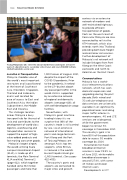
     Young Malaysians who enter the labour market have undergone at least 11 years of education up to secondary school level, and over 250,000 tertiary students graduate every year.
Location & Transportation
Malaysia straddles one of the world's most important sea routes and is positioned at the heart of Southeast Asia. It borders Singapore, Thailand and Indonesia,
and is well located for
ease of access to East and Southeast Asia, the Indian Subcontinent, the Middle East and Oceania.
This strategic location makes Malaysia a busy transport hub for the rest of Asia and contributes to the development of world-class logistics, warehousing and transportation services to support the export of high- value-added products and fast moving consumer goods.
Malaysia's largest airport, the award-winning Kuala Lumpur International Airport (KLlA), is made up of 2 terminals, the Main Terminal KLIA and klia2 Terminal 2 (page 422), which together handled some 36.1 million passengers and more than
1,000 tonnes of cargo in 2021, despite the impact of the COVID-19 pandemic. Prior
to the pandemic, it ranked
as the 23rd busiest airport
(by passenger traffic) in the world. KLIA is supported
by an extensive network
of regional and domestic airports (see page 426), all with well-developed air cargo facilities.
Nevertheless, with Malaysia's great maritime trading history it is no surprise that 98% of the country's trade is still carried by sea, via an extensive network of international ports and cargo terminals. Port Klang and the Port
of Tanjung Pelepas are amongst Asia's top ten seaports, while Bintulu
in Sarawak is the world's busiest liquid natural gas (LNG) terminal. (See pages 452-459).
The country's ports and airports are connected to major cities and growth
centres via an extensive network of modern and well-maintained highways, to provide efficient transportation of goods. Ports on the west coast of Peninsular Malaysia are also connected by rail via the KTM network, which also extends north into Thailand, providing both bulk freight and container rail services. Further development of Malaysia's rail network will include linkages from Port Klang on the West Coast eastwards and north to Kelantan on the East Coast.
Communications
Malaysia has a world-
class telecommunications network, which has seen dramatic expansion and upgrading during the past decade. Both wired and
3G cellular telephone and data services are universally available in all significantly populated areas and along major traffic arteries in remoter regions. 4G and LTE services are widespread, while the government began to roll out 5G coverage in December 2021. The country’s goal is to
have 80% of the population able to access 5G mobile coverage by 2024.
Penetration for fixed broadband Internet services is over 39.9% as of June 2021, while mobile broadband coverage is around 127.4%, with some 45 million estimated internet users.
Developments in ICT


