


Page 375 - Westport Guide To Malaysia
P. 375
THE GUIDE TO MALAYSIA 367
  leverage green technologies and local workforce and capabilities.
Maintaining Halal Integrity
The Department of Islamic Development Malaysia (JAKIM) is the agency tasked with certifying and enforcing halal certification nationally and for export, and their "Halal Malaysia" logo is widely recognised as a guarantee not only of compliance with religious requirements but also with the highest standards of food manufacturing and processing hygiene.
JAKIM maintains a National Halal Directory, a list of halal restaurants and food & beverage outlets
and a list of Approved International Applicants to enable consumers to make informed choices. Any business or product that bears the "Halal Malaysia" logo carries with it the full authority of the Malaysian Government that it is indeed completely halal.
Halal e-Commerce
DagangHalal, launched
in 2007, is the world's pioneering halal business- to-business (B2B) trade platform. In 2013 it launched its Halal Verified Engine (HVE), a halal certificate verification system, and in 2016 it added its proprietary Halal Application
Approval System (HAAS). DagangHalal is now partner to 42 halal certification
bodies out of approximately 120 globally. In January 2018, it launched Meembar, an end consumer-targeted app that locates halal restaurants and hotels as well as mosques in different countries.
Aladdin1, launched
in January 2021, is an e-commerce platform for authentic halal products in a wide selection of categories. It currently operates in Malaysia and Laos, with a further 16 countries targeted in the near future.
Halal Market Prospects
The halal industry is expected to contribute 8.1 per cent to the country’s GDP and generate RM56 billion export revenue in 2025 compared to RM30.6 billion in 2020, according to the 12th Malaysia Plan (12MP) document released by the Economic Planning Unit (EPU) in September 2021. This will be achieved through a framework developed by the HDC under the Halal Industry Master Plan 2030 for
the development of the country’s Halal industry for the next 10 years.
The capacity and capability of the halal industry will be enhanced by upgrading the development of halal talent, establishing halal professional recognition, accelerating industry development, increasing product competitiveness,
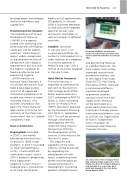
Browsing Aladdin1, an authentic, halal-focused lifestyle products and service platform launched in January 2021.
and positioning Malaysia
as a global halal hub. The halal supply chain will be improved, and existing distribution centres such
as the Digital Free Trade Zone (DFTZ), Port Klang Free Zone (PKFZ) and halal e-commerce platforms would be leveraged
to promote seamless connectivity of the halal supply chain. Malaysia
will be promoted as a
prime destination for halal investment through various international platforms, such as ASEAN, the Organisation of Islamic Cooperation (OIC), Chambers of Commerce and Malaysian Overseas Missions.
An aerial view of the Selangor Halal Hub at Pulau Indah, adjacent to Port Klang. The first of its kind in Malaysia and globally, it received the Best Halal Hub Award at the Asia Halal Brand Awards 2019.


