


Page 256 - The Guide To Sarawak
P. 256
 254 AGRICULTURE
   PLANTATION CROPS
Because of Sarawak’s
large land area and low population density, intensive farming is only viable close to urban centres. Further afield, the mainstay of
the agricultural sector is plantation crops, which require far less labour and materials and do not need to be shipped so rapidly to end-user markets. Sarawak’s major crop exports are all plantation-grown, namely palm oil, sago starch and natural rubber.
Oil Palm
Although commercially planted only since 1966,
oil palm has become easily the most important of Sarawak’s crops. Around 3.9 million ha, or 31% of
the state’s total land area,
is potentially suitable for
oil palm planting, of which
approximately 920,000 ha is already planted, i.e. 7.3% of the total land area. Possibly the greatest value of oil palm is its ability to grow on a wide variety of soils, including peat soils unsuitable for most other commercial crops. A further advantage is that oil palm grown on peat soils takes up even more CO2 from
the atmosphere than peat swamp forest left in its natural state. Also, contrary to widespread claims by certain NGOs, no oil palm in Sarawak is planted
on former or existing orangutan habitats, nor will it be in the future.
The increasing worldwide demand for high quality edible oils is being leveraged to help develop Sarawak’s rural communities. Much of the land suitable for oil
palm is Native Customary Rights (NCR) Land, held by members of indigenous communities, which has little economic value
other than for shifting subsistence cultivation. Thanks to the pioneering efforts of the Sarawak Land Consolidation and Rehabilitation Authority (SALCRA), many rural communities have been helped to set up joint venture partnerships with leading plantation companies. As a result, almost 40% of Sarawak’s planted area is NCR land, with former subsistence farmers now earning a decent living from their land holdings.
Sarawak’s oil palm sector has emerged as the fastest- growing of any state in Malaysia, yet the state’s long term plan is to more
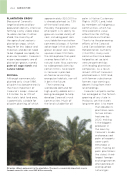
     Oil palms (Elaeis guineensis) in the plantation. The most economically important crop in Sarawak earns the state over RM5 billion annually.
than double its plantation area to two million hectares by 2020, making
it the biggest producer in
the country. Sarawak’s crude and processed palm oil exports were worth RM4.56bil in 2010, making oil palm plantations the state’s third- largest foreign exchange earner, after petroleum and liquefied natural gas.


