


Page 62 - The Guide To Sarawak
P. 62
 60
THE PEOPLE
 enhanced by the kain songket, a sarong made
of golden thread known as kain samping when worn
by a man and kain koyok when worn by a woman. Their headgears are called songkok or tanjak (men) and kurikam or tudung (women) They are worn simply for everyday wear or elaborately at weddings and functions held regularly in the community.
Malay festivals usually culminate with the Aidilfitri or Hari Raya to celebrate the end of the fasting month of Ramadan and
the commencement of the month of Syawal in the Islamic calendar every year. This is when the Malays celebrate the famous open house tradition, where
rich dishes and elaborate
sweetmeats are laid out for relatives, friends and strangers to feast upon. During weddings, usually celebrated during the weekends, the Malay propensity for vibrant spiritual and cultural celebration can be seen
in the profusion of bright colours of the baju kurung, as people congregate in their local mosques and kampongs (villages).
The music and songs of the Malays are of various genres such as asli, langam, keroncong, dangdut, beredah and puisi that have been modernised with the accompaniment of western musical instruments. Various genres of theatre such
as bangsawan and lawak ienaka exist alongside modern spoken and musical
theatre. Notable dances include zapin, joget, iilin and inang, with music and songs performed in full traditional dress. During celebrations, a drum group, hadrah and salawat (drums and voices) accompanies symbolic displays of silat,
a uniquely Malay martial art, to honour the invited notables or the newlyweds.
The Malays of Today
Modern Malays occupy prominent roles in government and the
civil service, a legacy of
the Brooke Era when Sarawak’s Malays first proved themselves as able administrators. Many can also be found in the higher echelons of the business sector, in banking, shipping, commerce and industry.
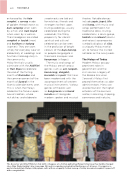
       The Governor and Chief Minister chat with colleagues at a formal gathering. Malay formal wear has hardly changed since Raja Muda Hashim’s day (see page 58) and is nowadays adopted by Muslim men of all races. It comprises a pastel-shaded Baju Melayu (silk pyjama suit) with an elegantly folded sarong of richly brocaded songket, topped off with a songkok hat.


