


Page 69 - The Guide To Sarawak
P. 69
THE GUIDE TO SARAWAK
67
   CULTURE AND CUSTOMS
The Bidayuh are traditionally hill padi farmers, who also cultivate cash crops such
as pepper, rubber, fruits, vegetables and oil palm,
and rear pigs and chickens for their own consumption. Hunting was formerly important but population growth and scarcity of game means this is no longer a major protein source. Some Salako-Lara Bidayuh from the Lundu area are also involved in coastal fishing, alongside their Malay neighbours.
The majority of Bidayuh live in villages made up of individual wood and brick houses, although a few traditional longhouses still remain, complete with a panggah or head-house,
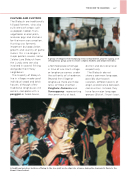
A group of villagers from Kampung Serasot, Bau District, play the agung, a set of huge brass gongs used to create complex rhythms and simple melodies.
   a fortified place of refuge
in time of war. Each village or longhouse comes under the authority of a headman. Beyond the village or longhouse there are three ranks of tribal chieftain - Penghulu, Pemanca and Temenggong - representing the community at local,
district and divisional level respectively.
The Bidayuh do not
share a common language, possibly due to past isolation, different points of origin and distance between communities. Instead, they have four major language groups (Biatah, Singai-Jagoi,
     A traditional priestess holds an offering to the rice spirit as she slips into a trance during the shamanistic finale to the Gawai Sa’wa festival.


