


Page 77 - The Guide To Sarawak
P. 77
THE GUIDE TO SARAWAK
75
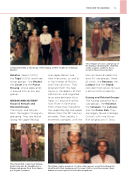
       A Kejaman family, a sub-group of the Kajang, at their longhouse in Belaga District.
The Sekapan are also a sub-group of the Kajang, explaining the similarity of this couple’s outfits to those shown in the previous picture.
Kenyah alone divided into over 30 sub-groups, three of which, the Berawan, the Lakiput and the Sebob, consider themselves to have a distinct ethnic identity.
Kajang and Related Groups
The Kajang comprise four sub-groups, the Kejaman, the Sekapan, the Lahanan, and the Punan Bah. They are largely found in Belaga District, with two Punan Bah longhouses in Tatau
Beketan (about 2,000), the Tagal (1,000) and three minor groups - the Bhuket, the Lisum and the Punan Busang, whose population is around 500 or less per group.
ORIGIN AND HISTORY
Kayan & Kenyah and Related Groups
The Kayan and Kenyah form the largest Orang Ulu grouping. They are found along the upper Rejang
and upper Baram and
their tributaries, as well as in the interior of Bintulu
and Tatau districts. They originate from the Apo Kayan in the depths of East Kalimantan, and migrated to an area between Usun Apau in Sarawak and the Iwan River in Kalimatan. From there they moved to the upper Rejang and upper Baram from the 18th Century onwards. Their society is extremely complex, with the
     This Punan Bah couple from Belaga district can also be identified as a Kajang sub-group from their simple yet elegant costumes.
This Sihan couple, members of a tiny ethnic group, assert their Orang Ulu identity with their headgear, yet the man’s tattoos and the woman’s baju kebaya are more typical of their Iban neighbours.


