


Page 78 - The Guide To Sarawak
P. 78
 76
THE PEOPLE
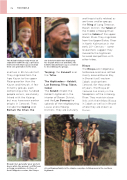
     This Kelabit lady proudly wears an exquisite beadwork cap, a priceless heirloom item that is passed down from one generation to the next.
and two in Bintulu district. They migrated from the Apo Kayan to the upper Rejang earlier than the Kayan and Kenyah. A few minority groups, each comprising a few hundred people or less, are closely linked with the Kajang
but may have even earlier origins in Sarawak. They include the Seping and Bemali, the Sihan, the
An elderly Kelabit man displaying his elegant brass ear pendants. His brimmed basketware cap is common to most Orang Ulu groups.
Tanjong, the Kanowit and the Tatau.
The Highlanders - Kelabit, Lun Bawang, Tring, Tabun, Saban
The Kelabit inhabit the Kelabit Highlands in the interior of Baram District, and the Lun Bawang the uplands of the neighbouring Lawas and Limbang Districts. They are culturally
and linguistically related, as are three smaller groups; the Tring of Long Terawan, Baram District, the Tabun of the middle Limbang River, and the Saban of the upper Baram River. They migrated from the Upper Bahau River in North Kalimantan in the early 20th Century - some researchers suggest they moved to the highlands
to avoid competition with other tribes.
Bisaya
The Bisaya are indigenous to Borneo and have settled mainly around Brunei Bay, in Brunei itself, western Sabah, and northern Sarawak, for thousands
of years. The Bisaya of Sarawak live mainly in the floodplains of the Limbang River. They maintain close links with their fellow Bisaya in Sabah as well as in Brunei where they are known as Dusun.
     Bisayah men generally wear western dress, while the women’s outfits bear a strong resemblance to those of their Philippine cousins, the Visaya.
A Lun Bawang family in the simple everyday clothing worn in the northern highlands.


