


Page 90 - The Guide To Sarawak
P. 90
 88
OTHER COMMUNITIES
 The Eurasians
By Dona Drury-Wee and James Ritchie
Origin and History
Sarawak’s first Eurasians were the offspring of European officers of the Brooke Raj and local women of various races. Identified as “people of mixed marriages”, most were sent to the Anglican St Thomas’s School in Kuching, where the majority became Christians.
Rajah Sir James Brooke was most reliant on two Malaccan Eurasians - Domingo De Rozario and Thomas Williamson - who served as his interpreters. Rajah Sir Charles Brooke was a firm advocate of inter-racial marriage;
prior to his succession, a son, Esca (or Isaka), was born to Dayang Mastiah,
a Malay woman from Sri Aman, but was sent away for adoption in London to avoid potentially divisive succession problems. Today
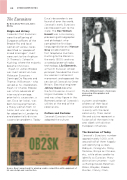
Esca’s descendants are found all over the world. Sarawak’s early Eurasians contributed much to the state. The Rev William Howell was a missionary, pioneering ethnographer and philologist who compiled the first Iban language dictionary. Horace Gray established the
first telephone line from Kuching to the Baram in
the early 1900’s and was
a noted pioneer of radio technology. Lily Eberwein,
a Muslim Eurasian school principal, founded the Kaum Ibu women’s nationalist movement and opposed the cession of Sarawak to Great Britain. Electrical engineer Johnny Owen became
the first Eurasian Council Negeri member in 1946
and was a key figure in the Borneanization of Sarawak’s utilities at the end of the colonial era.
Culture and Customs
Sarawak Eurasians have adopted the culture,
The Rev William Howell – missionary, pioneering ethnographer and philologist.
customs and modes
of dress of their local ancestors and blend
in easily with the local community. Their social life and cuisine represent a fusion of all the races into one, albeit with distinct European influences.
The Eurasians of Today
Sarawak’s Eurasians number approximately 1,000, with around half of them happily self-identifying as Iban, Bidayuh, Orang Ulu, Malay, Melanau, Bisaya or Chinese, etc., while others prefer to identify as Eurasian. Many distinctive surnames - such as Baring-Gould, Bateman, Bates, Blaydes, Brodie, Buxton, Clancy, Clark,
       Horace Grey’s award card for winning a radio competition with equipment of his own design and construction.


