


Page 233 - The Guide To Sarawak
P. 233
THE GUIDE TO SARAWAK
231
  There are 28 different carnivores found in Sarawak, mostly members of the
cat family, including the elusive Bornean clouded leopard and the world’s
only herbivorous cat, the binturong or bear cat. Other carnivores include the world’s smallest bear, the Malayan sun bear, as well
as three mongooses and four otters. Other notable mammals include the colugo (flying lemur), the armoured, ant-eating pangolin, various deer, mouse deer and bearded pigs.
Sarawak’s best-known mammals are the primates, especially the Bornean orangutan and the bizarre,
long-nosed proboscis monkey. Orangutans can be viewed at Semenggoh Nature Reserve, Matang Wildlife Centre (pages
244, 245) and Batang
Ai NP (see page 239). Proboscis monkeys are easy to view at Bako NP, Maludam NP and from
tour boats exploring Kuching Mangroves NP. The 10 other primate species including the Bornean gibbon (Hylobates muelleri), 5 langurs, 2 macaques, the western tarsier and the slow loris.
Sarawak’s seas have
27 resident and visiting cetaceans, ranging from the small finless porpoise
(1.50m) to the blue whale, the largest animal to
ever live, at 33m and 180 tonnes. Most are pelagic, i.e. they inhabit the open ocean away from the shore. The main exception is the Irrawaddy dolphin, which lives in brackish water near river mouths and in estuaries. There
is a large population of Irrawaddys in Bako-Buntal Bay, near Kuching, and dolphin watching tours
are popular during the dry season (April - October). Another notable marine mammal is the dugong, which inhabits the seagrass beds of Lawas, in northern Sarawak.
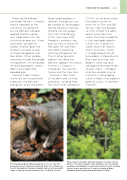
        The Sunda pangolin (Manis javanica) is one of only two pangolin species found in Southeast Asia. It is common in forests throughout lowland Sarawak and uses its powerful claws to dig up ant and termite nests, on which it feeds.
The proboscis monkey (Nasalis larvatus) is found only in Borneo. The most aquatic of all primates, it is a powerful swimmer and inhabits coastal and riverine forests, feeding on tree leaves and shoots. It can be viewed at Bako, Maludam and Kuching Wetlands National Parks.


