


Page 65 - The Guide To Sarawak
P. 65
THE GUIDE TO SARAWAK
63
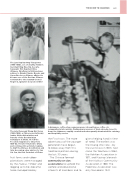
       The Late Kapitan Ong Tiang Swee (1864-1950), son of wealthy Hokkien merchant Ong Ewe Hai, became Sarawak’s first Kapitan China (Chinese Chieftain) in 1889 and was advisor to Rajahs Charles Brooke and Vyner Brooke on Chinese affairs. He became one of the first two Chinese nominated to the Sarawak Council Negeri (Legislative Council) in 1937.
The Late Reverend Wong Nai Siong (1849-1924), a Chinese revolutionary leader, Methodist minister and founder of the first Christian newspaper in China. He led the Foochow migration to Sibu from 1901-02. He later returned to China and continued his activism, helping to draft the Chinese Constitution and later becoming a key advisor to Sun Yat Sen, the first President of China.
fruit farms and rubber plantations were managed by the Hakkas. Timber and logging activities became to be monopolized by
A Hainanese coffee-shop owner prepares strong Borneo coffee. As comparatively late arrivals, finding many avenues of trade already closed to them, the Hainanese rapidly created and subsequently dominated the catering and hospitality sector.
 the Foochows. The more adventurous of the younger generation have begun
to break away from this traditional pattern during the last 30 years.
The Chinese formed
community or clan associations to uphold the welfare and educational interests of members and to
give a helping hand in time of need. The earliest was the Kwang Wai Siew - by the Cantonese in 1853, next came the Teochew in 1864, the Hokkien Association in 1871, and Kaying (a branch of the Hakkas) Community Association in 1881. The Foochow Association was only founded in 1941.


