


Page 66 - The Guide To Sarawak
P. 66
 64
THE PEOPLE
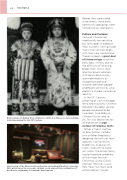
    Bride and groom display their sumptuous outfits at a Chinese society wedding in Kuching during the late 19th Century.
Before they were called associations, these early community groupings were named Kongsi (company).
Culture and Customs
Sarawak Chinese are traditionally conservative but fairly open minded on most customs, having fused many traits of their origin with their new motherland. There has been a great deal of intermarriage since the early days, initially due to the difficulty of sourcing brides from China, then later to cement relations with local communities,
and more recently as straightforward love- matches between people
of different ethnicities who profess a shared Sarawakian identity.
In the 19th Century, offspring of such marriages remained staunchly Chinese. However nowadays young people are proud to be Sino-Iban, Sino-Bidayuh, Chinese Muslim and so
on. This has led to families who practice a large number of religious faiths
- father a Taoist, mother
an Iban Roman Catholic, with children frequently adopting the faiths of their spouses; Confucianism, Buddhism, Anglicanism, Islam, Hinduism to name just a few. The entire family would therefore celebrate all the major festivals - Christmas, Gawai Dayak (Harvest Festival), Lunar New Year, Hari Raya (end
of Ramadhan), Easter,
 Interior view of the Chinese History Museum on Kuching Waterfront (see page 126), which traces the economic, cultural, social and political contributions of the Chinese community to Sarawak’s development.


