


Page 82 - The Guide To Sarawak
P. 82
 80
THE PEOPLE
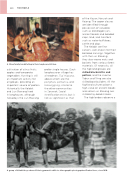
    A Sihan family breakfasting in their longhouse kitchen.
of the Kayan, Kenyah and Kajang. The upper classes are identified through possession of valuables such as old dragon jars, ancient beads and beaded caps, land, and livestock such as water buffaloes, cattle and pigs.
The Kelabit are fine carvers, well-known for their bamboo carvings. Together with the Lun Bawang
they also weave mats and baskets from various forest materials. Of necessity, all the highland groups are skilled blacksmiths and potters, and the riverine Tabun and Tring are also skilled boat builders. All the highland cultures place a high value on ancient beads and some Lun Bawang are skilled clay-bead makers.
The highlanders observe a
cultivation of citrus fruits, apples and temperate vegetables. Hunting is still an important activity for
all groups, providing an important source of protein. Historically the Kelabit
and Lun Bawang lived
in longhouses, although nowadays the Lun Bawang
prefer single houses. Each longhouse or village has a headman, Tua’ Kapung, above whom are the penghulu, pemanca, and temenggong, similar to the other communities
in Sarawak. Social stratification exists, but is not as significant as that
     A group of Kelabit boys show off their gymnastic skills to ethnographic photographer Charles Hose, circa 1910.


